




By 2026, organizations will have poured billions into employee engagement — yet the deeper problem is mattering at work. Surveys run quarterly. Well-being apps get rolled out. Recognition platforms send automated birthday messages and digital badges. And yet, 30% of workers still feel invisible at work, 65% feel underappreciated, and 82% report some form of loneliness on the job. The numbers have barely moved.
This is not a story of managers who do not care. Most do. The problem is that they have been solving the wrong problem. They have been targeting engagement when the real deficit is something deeper: mattering at work.
Mattering is not a soft concept. It is a documented psychological need, and its absence is expensive. Jennifer Wallace, writing in the Wall Street Journal, put the cost of loneliness-driven, stress-related absenteeism at more than $154 billion annually in the United States alone. The U.S. Surgeon General named mattering a key pillar of workplace mental health in the 2022 Framework for Workplace Mental Health. Researchers have been clear about this for years. Most managers have not gotten the message, not because they are indifferent, but because the systems they work inside have trained them to focus on metrics, not meaning.
Mattering Is Not an Engagement Metric
Engagement surveys measure behavior. They track whether an employee is showing up, contributing, and intending to stay. These are useful proxies, but they are not the same as the experience of feeling that you matter to the people around you.
A person can score as highly engaged on a survey and still go home every Friday feeling completely unseen. They complete their tasks. They hit their numbers. They participate in team meetings. But nobody has called them by name in a way that felt genuinely personal. Nobody has noticed what they are good at versus what they are merely competent at. Nobody has asked what they are working toward.
Engagement captures behavioral output. Mattering is a relational experience. It asks a different question entirely: Do I feel significant to the specific people I work with every day? If managers treat engagement scores as a proxy for that answer, they will keep misreading the room.
Pay and Perks Do Not Create Mattering at Work
Zach Mercurio, writing in Harvard Business Review in May 2025, put it plainly: “Many employees don’t feel that they matter to their employers, bosses, and colleagues, and these trends persist despite investments in new engagement surveys and platforms, well-being programs, better hiring and retention initiatives, increased wages, and DEI initiatives, because mattering doesn’t result from pay, policies, or perks.”
This is worth sitting with. A raise communicates that your output is valuable. It does not communicate that you, as a person, are significant to the people you work with. These are not the same message. One addresses material need. The other addresses a core psychological one.
A flexible work policy signals that the organization respects your time in aggregate. It does not signal that your direct manager knows what you are struggling with this month, or what project you are most proud of, or what kind of recognition actually lands for you versus the kind that makes you quietly uncomfortable. Perks scale. Mattering does not. It has to happen person to person.
Belonging and Mattering Are Not the Same Thing
Most organizations now invest in belonging as a strategic priority, and that investment is not wasted. Belonging and mattering at work are distinct: belonging means fitting in; mattering means being noticed, relied on, and missed if absent
Belonging means feeling accepted within a group. It is the experience of fitting in, of not being excluded, of having your identity welcomed rather than tolerated. It matters enormously. But Mercurio’s research draws a precise line: mattering is “an even more fundamental need than belonging.”
Someone can belong to a team and still feel invisible within it. They are included in the Slack channel. They get invited to the team lunch. They are not left out. But nobody in that group is genuinely changed by their presence. Nobody would particularly notice if they were gone. That is the mattering gap, and belonging initiatives do not close it.
Three behaviors that create a sense of mattering at work
- Awareness (noticing the person),
- Importance (affirming their unique significance),
- and reliance (showing you depend on them)
Feeling invisible at work is one of the most corrosive experiences a professional can have, and it often coexists with surface-level inclusion. You can read more about how this plays out for individuals at the link below.
For a closer look at the lived experience of workplace invisibility, see: Feeling Invisible at Work.
Recognition Programs Are Not Enough
Recognition programs exist because they work, to a degree. Being acknowledged publicly for a specific contribution does produce a short-term boost in motivation and connection. The problem is the gap between formal recognition events.
A quarterly award ceremony, an employee-of-the-month nomination, an end-of-year bonus message from the CEO: these are meaningful moments. But they are not a substitute for what Mercurio identifies as the actual mechanism of mattering: “Creating a sense of mattering happens most fundamentally in the course of daily interpersonal interactions.”
The space between recognition events is where most employees actually live. And in that space, what they notice is not the absence of awards. It is the absence of small, consistent signals that they are seen. A manager who remembers what someone mentioned last week about a difficult client. A check-in that is about the person, not just the project status. A comment on a piece of work that demonstrates actual attention, not just approval.
Micro-moments are not a soft alternative to formal recognition. They are the infrastructure that makes formal recognition credible. Without them, the quarterly award feels like a performance rather than an acknowledgment.
Making Performance Visible While Making the Person Invisible
There is a specific managerial failure mode that metric-heavy cultures produce. Managers can know an employee’s OKRs, output rates, sales numbers, and performance review scores to three decimal places, yet have almost no idea what that person actually cares about. What motivates them beyond compensation? What kind of work makes them feel capable? What they are afraid of professionally. What they want to be known for.
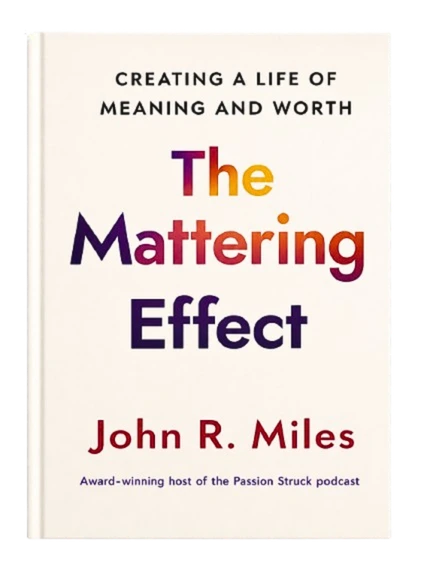
John R. Miles, author of The Mattering Effect, identifies an archetype he calls the Professional: someone whose expert judgment has been overwritten by metrics and scripts. This is not a character flaw. It is what happens when systems optimize for measurement and leave no room for the relational texture that creates mattering.
When a manager only engages with an employee at the level of deliverables, the implicit message is: your output is what matters here, not you. High performers are especially vulnerable to this dynamic. They deliver consistently, so they rarely trigger concern. But producing results and feeling significant are not the same experience.
This is a pattern worth examining in depth. See: Why High Performers Feel Invisible at Work.
What Actually Creates Mattering at Work
The sociologist Morris Rosenberg described mattering as having three components: awareness, importance, and reliance. Applied to the manager-employee relationship, these translate into three specific and learnable behaviors.
Awareness means noticing. Not noticing performance, but noticing the person. It is the difference between “good work on that report” and “I noticed you restructured the argument in that third section. That was the right call.” Awareness requires attention at a level of specificity that generic praise does not.
Importance means affirming that the person has significance to you, not just to the project. It sounds like: “I want to know what kind of work you want to be doing more of,” or “That insight you shared last week changed how I was thinking about this.” It communicates that the person’s perspective, not just their output, registers.
Reliance means genuinely depending on someone in a way that you communicate to them directly. Not assigning tasks, but naming why you are asking this particular person. “I want you on this because your instincts on the customer side are better than mine” is a reliance statement. It tells someone that they are not interchangeable.
These three behaviors form the practical foundation of what Miles calls the M.A.T.T.E.R. Framework: Meaning, Autonomy, Trust, Time, Energy, and Reciprocity. The framework is not a checklist. It is a system for rebuilding the relational infrastructure that metric-heavy management has eroded.
The systemic approach to rebuilding that infrastructure is detailed at matteringeffect.com.
The business case is not just philosophical. BetterUp research found that employees with a strong sense of belonging see a 56% increase in job performance. Mattering is the deeper mechanism underneath that number. And the return shows up in reduced absenteeism, lower turnover, and higher-quality work, not just in survey scores.
Frequently Asked Questions
Isn’t mattering at work just about being nice to people?
No. Niceness is generic. Mattering is specific. A manager can be warm, pleasant, and consistently polite while still making employees feel invisible, because niceness does not require seeing someone as an individual. Mattering requires attention, specificity, and genuine reliance. It is a set of behaviors, not a personality trait.
What is “mattering at work”?
Feeling noticed, valued, and relied on by the specific people you work with—not just recognized for output.
How is mattering at work different from recognition?
Recognition is event-based. It happens at defined intervals and acknowledges something a person did. Mattering is relational and ongoing. It is about whether someone feels significant to the specific people they work with every day, independent of formal acknowledgment. Recognition can contribute to mattering, but only when it is backed by consistent day-to-day signals that the person is genuinely seen.
What is the business case for focusing on mattering at work?
The costs of its absence are well-documented. Loneliness-driven absenteeism costs U.S. employers more than $154 billion annually. Employees who feel that they matter show up differently: they perform at a higher level, stay longer, and bring more of their actual capability to their work. The Surgeon General’s framework names mattering as a structural factor in workplace mental health, which means the regulatory and reputational stakes are rising as well.
Where should managers start?
Start with awareness. In the next week, try to notice something specific about each person you manage, something beyond their deliverables. Notice a decision they made, a framing they used, a pattern in how they work. Then name it out loud. That single shift, from generic acknowledgment to specific attention, is the beginning of a mattering practice.
The Work Ahead
The data from 2026 is not going to improve on its own. Not through more surveys, not through more well-being apps, not through additional perks. The organizations that close the mattering gap will do it the same way it has always been done: through managers who are willing to shift their attention from what people produce to who people are.
That shift is not complicated. But it is deliberate. And it has to happen every day, in small moments, between formal recognition events, in the texture of ordinary interactions.
That is where mattering lives. Not in the quarterly review. Not in the all-hands announcement. In the conversation after the meeting. In the question that demonstrates actual interest. In the moment when someone realizes that the person across from them has genuinely noticed.
John R. Miles explores this in depth in The Mattering Effect. Pre-order your copy and explore frameworks for building a workplace where people feel genuinely significant at matteringeffect.com.