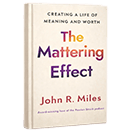




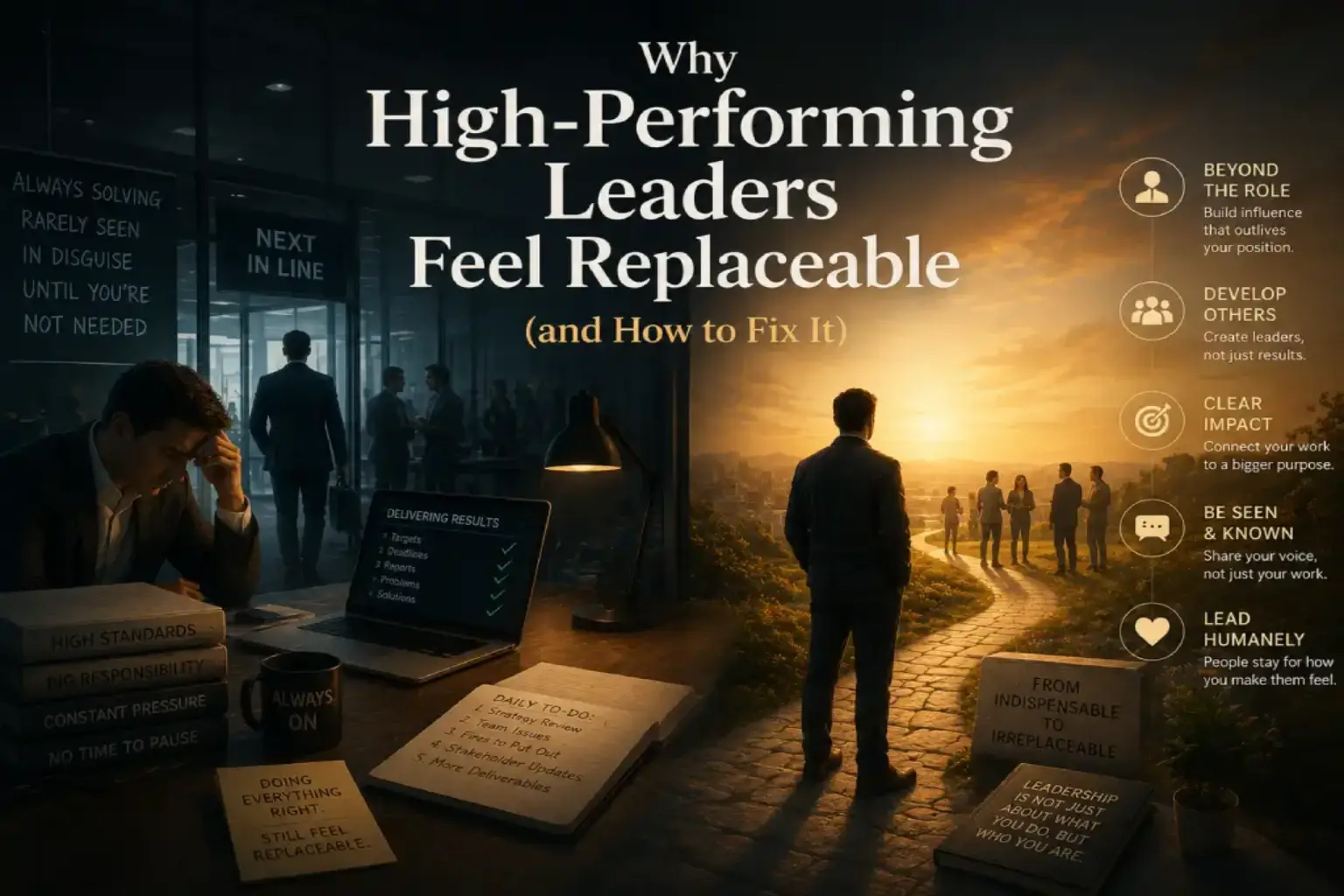
John R. Miles has spent years studying why certain people and organizations flourish while others stagnate and his answer returns, again and again, to a single word: mattering. His forthcoming book, The Mattering Effect, releases October 6, 2026, through Waterbrook/Penguin Random House and it offers a framework for understanding why so many human beings, regardless of their title or output, move through their professional lives feeling fundamentally unseen. This article addresses one of the most quietly disorienting experiences in modern leadership: the paradox that high-performing leaders feel replaceable, despite years of measurable achievement and outward success.
The Mattering Effect draws on what Miles calls the M.A.T.T.E.R. framework to explain how significance is built, eroded and reclaimed. For leaders operating at the top of their organizations, this framework offers something rare: a precise vocabulary for a pain most are afraid to name.
The Paradox at the Heart of High Achievement
There is a common assumption embedded in how we talk about leadership: that people who rise to senior roles have, in some essential way, proven their worth. They have delivered results, survived politics and outlasted competitors. They have earned the title. And so we rarely think to ask whether they feel like they matter.
But the data tells a different story. A 2022 study published in the Harvard Business Review found that nearly 40 percent of senior leaders reported feeling disconnected from a sense of purpose at work, even while rating their own performance as high or above expectations. The achievement is real. The recognition, in many cases, is real. And still, something is missing.
What is missing, in most of these cases, is mattering. Not praise. Not compensation. Not another responsibility added to an already full plate. The experience of mattering is distinct: it is the felt sense that you are seen as a person, not only as a function; that your perspective is genuinely sought; that your continued presence in this organization is not simply a matter of convenience but of irreplaceable value. For many high-performing leaders, that experience has become foreign.
This is not a personal failure. It is a structural one. And understanding where it comes from is the first step toward changing it.
How Organizations Create the Conditions for Invisible Leaders
Miles uses the term systemic unmattering to describe what happens when institutions, through their norms and rhythms and reward structures, strip people of the experience of significance. This is not cruelty. It is the accumulated weight of a thousand small signals: meetings where your input is noted and immediately set aside; decisions that land on your desk fully formed, waiting only for execution; performance reviews that measure output and never once ask how you are doing as a human being.
For frontline employees, these signals are damaging. For senior leaders, they carry a particular kind of sting, because the implicit promise of advancement has always been that someday your voice will count. You worked toward a seat at the table. And now that you have it, you are discovering that the table was not quite what you imagined.
Organizations create invisible leaders through a specific set of mechanisms. Decisions are increasingly made by consensus processes that, paradoxically, dilute individual voice rather than amplify it. Strategy is set in rooms where leaders are present but not truly heard. Speed is valued so aggressively that the time required to actually understand what any given person thinks has been engineered away. And high performers, having learned that showing vulnerability is risky, rarely name what they are experiencing. They just begin to disengage. Or they leave.
The result is a quiet crisis that most organizations do not recognize until it becomes a retention problem. By then, the damage is already done.
Autonomy and Trust: The Two Signals Most Likely to Break First
Within the M.A.T.T.E.R. framework, each letter names a dimension of the mattering experience: Meaning, Autonomy, Trust, Treatment, Expression and Reciprocity. In Miles’s research, two of these dimensions collapse most reliably for high-performing leaders: Autonomy and Trust.
Autonomy is not simply the freedom to make decisions. It is the experience of being trusted to exercise judgment, of having your professional instincts treated as a resource rather than a liability to be managed. When organizations grow large or when they face pressure, they often respond by tightening control. Approval layers multiply. Processes that once required a single conversation now require a committee. High-performing leaders find themselves executing decisions they were not part of making, toward goals they were not part of setting. Their expertise is drawn upon, but their authority is quietly contracted.
Trust, in the M.A.T.T.E.R. framework, operates in both directions. Leaders need to trust the organization, but they also need to feel trusted by it. When trust breaks down, people begin to feel invisible at work, not because no one can see them, but because what they see in return is a mirror that reflects only their output, never their worth. A high-performing leader who is constantly monitored, second-guessed, or bypassed on key decisions does not feel trusted. And without trust, the experience of mattering cannot hold.
What This Looks Like in Real Leadership Contexts
Leaders who have reached VP or C-suite often describe a version of the same experience. They have arrived. They are respected. And they are deeply, quietly unsettled by the sense that they could be replaced tomorrow and the machine would continue without missing a step. What they are describing is not imposter syndrome, though it can resemble it. It is something more specific: the experience of feeling fungible.
“I kept getting promoted,” one chief marketing officer told Miles during his research. “Every performance review was excellent. But I never felt like the company actually needed me specifically. It felt like they needed someone in my role and I happened to be there.”
This is the fungibility gap: the distance between performing a function well and being genuinely irreplaceable. Organizations rarely close this gap deliberately, because closing it requires time, intention and a willingness to treat leaders as whole people rather than role-fillers. Most organizations do not have the structural capacity for that kind of investment.
The signs tend to cluster around a few recognizable patterns. Leaders begin to execute without advocating. They stop pushing back on decisions they disagree with, not because they have changed their minds, but because they have stopped believing their dissent will be heard. They disengage from mentoring relationships because the energy required to invest in others has been eroded by their own sense of depletion. And they begin, often without acknowledging it to themselves, to treat their position as temporary, which becomes a self-fulfilling dynamic.
The Mattering Dividend: Why This Is Also a Team Problem
There is a downstream effect to all of this that organizations rarely account for in their models. Miles calls it the Mattering Dividend: the compounding return that flows through an organization when its leaders feel genuinely seen and valued and the compounding loss that follows when they do not.
A leader who has stopped feeling like they matter does not simply stop mattering to themselves. They stop creating conditions in which their team members can matter. The experience of significance is not only personal; it is relational and contagious. Leaders who feel trusted extend trust. Leaders who feel heard create space for their direct reports to be heard. Leaders who experience genuine autonomy are more likely to develop it in others. When that dynamic reverses, the damage spreads in ways that are almost impossible to trace back to their source.
This is why rebuilding a high-performing leader’s sense of mattering is not a feel-good exercise. It is a structural intervention with measurable organizational consequences. The research on psychological safety, much of it pioneered by Amy Edmondson at Harvard Business School, consistently shows that teams whose leaders feel psychologically secure outperform those whose leaders are operating in a state of chronic uncertainty about their own worth. The Mattering Dividend is not a metaphor. It is a measurable outcome.
What High-Performing Leaders Can Actually Do
The first thing worth acknowledging is that the instinct to simply perform better, to prove worth through output, is almost always the wrong response to feeling replaceable. More achievement does not address the underlying gap. It only deepens the exhaustion.
What actually works begins with naming what is happening. Miles is emphatic on this point: you cannot reclaim something you have not first acknowledged losing. If you are a high-performing leader who has begun to feel fungible, that experience is worth taking seriously, not pathologizing, not explaining away, but examining with genuine curiosity. Where, specifically, do you feel unheard? In which relationships has the experience of trust broken down? What would it look like to advocate for yourself within this organization rather than simply executing within it?
From there, the practical work involves two movements. The first is internal: rebuilding a relationship with your own significance that does not depend entirely on organizational validation. This means reconnecting with the reasons you do this work, the specific ways in which your perspective and history and accumulated judgment are genuinely distinct and the forms of contribution that feel meaningful to you, independent of how they are measured. The second movement is relational: identifying the one or two people in your organization whose perspective of you feels accurate and generative and investing in those relationships deliberately.
Miles also draws on the reciprocity dimension of the M.A.T.T.E.R. framework here. Reciprocity, the R, is about the mutual exchange of significance. One of the most reliable ways to restore your own experience of mattering is to become more deliberate about creating that experience for others. When you see a colleague clearly, name what you observe and treat their contribution as irreplaceable rather than incidental, you not only give something to them. You also practice being the kind of leader who notices what matters, which has a way of making you more noticeable in return.
Frequently Asked Questions
What does it mean for a leader to feel replaceable?
Feeling replaceable is different from feeling uncertain or anxious. It is the specific experience of believing that your departure would cause no meaningful disruption, that someone with roughly similar credentials could step into your role and the organization would continue unchanged. In the language of The Mattering Effect, it is the experience of mattering as a function without mattering as a person.
Is feeling replaceable the same as imposter syndrome?
They can coexist, but they are distinct. Imposter syndrome is primarily about self-doubt: the fear that you are not as capable as others believe. Feeling replaceable, by contrast, does not require doubting your competence. Many high-performing leaders are entirely confident in their skills and still feel fungible. The wound here is not about ability. It is about significance.
What is the M.A.T.T.E.R. framework?
The M.A.T.T.E.R. framework is the conceptual spine of John R. Miles’s book The Mattering Effect. Each letter names a dimension of the mattering experience: Meaning, Autonomy, Trust, Treatment, Expression and Reciprocity. Together, these six dimensions describe the conditions under which human beings flourish and the specific ways those conditions erode in organizational and personal contexts. The framework is designed not as an abstract model but as a diagnostic tool, a way of identifying precisely where the experience of significance has broken down and what kind of intervention is most likely to restore it.
Can an organization fix this, or does it have to come from the individual?
Both are true, but they operate on different timescales. Organizational change is structural and slow; it requires leaders to redesign how decisions are made, how autonomy is distributed and how people are genuinely heard. Individual change is more immediate: a leader can begin to rebuild their own sense of significance today, regardless of what the organization does. Miles argues that waiting for the organization to change first is rarely a viable strategy, not because organizations cannot change, but because the individual’s experience of mattering is ultimately not something any institution can give or take entirely.
Why do high performers specifically struggle with this?
High performers tend to conflate performance with worth. When achievement has historically produced recognition, the absence of recognition after continued achievement creates genuine confusion. High performers also tend to be the least likely to name what they are feeling, because vulnerability has often been penalized on the path to where they are. The combination of heightened expectation, low permission to express distress and real organizational failure creates a particularly acute version of the problem Miles describes.
What is the Mattering Dividend?
The Mattering Dividend is Miles’s term for the organizational returns that flow when leaders feel genuinely seen and valued. When a leader’s sense of significance is intact, they are more likely to create conditions in which their team members also feel significant. That relational dynamic compounds: psychologically secure teams communicate more honestly, take more productive risks and recover from setbacks more quickly. The Mattering Dividend is the measurable version of what most leaders intuitively understand: that how people feel about their own worth shapes how they work and how they allow others to work around them.
Key Takeaways
- High-performing leaders feel replaceable, not because they lack ability but because their organizations have failed to create conditions in which they experience genuine significance as people rather than functions.
- Systemic unmattering is not an individual pathology; it is the result of organizational structures that prioritize speed and control at the expense of autonomy, trust and relational investment.
- The two dimensions of the M.A.T.T.E.R. framework most likely to erode for senior leaders are Autonomy and Trust and rebuilding them requires both individual initiative and organizational willingness.
- The Mattering Dividend describes the compounding returns that flow through a team when its leader feels genuinely valued, making leadership significance not only a personal concern but a strategic organizational priority.
- Reclaiming a sense of mattering begins with naming the experience honestly, not with performing harder and it is sustained through both internal reconnection and deliberate investment in reciprocal relationships.
Conclusion
There is something deeply disorienting about arriving at a place you worked hard to reach and discovering that it does not feel the way you expected. Many high-performing leaders will recognize this quietly: the title they earned, the results they deliver and the persistent, low-frequency hum of feeling like none of it quite adds up to the kind of significance they were reaching for. That is not a weakness. It is a rational response to environments that were never designed to make people feel like they matter as full human beings.
What John R. Miles offers in The Mattering Effect is not a motivational corrective. It is a structural one. He names what has gone wrong, traces it to its roots in both organizational design and cultural habit and lays out a framework grounded enough in research to be useful and personal enough to be true. The book does not promise that significance is easy to reclaim. It argues, convincingly, that reclaiming it is the most important thing a leader can do.
The Mattering Effect releases October 6, 2026. Pre-order your copy now and be among the first to read the framework that is changing how leaders think about significance, worth and the kind of work that makes a life. Explore more on the Mattering Effect blog.