




Mattering at work is the experience of knowing that you are seen, valued, respected, and that your presence and contribution make a meaningful difference. Yet there is a critical distinction that modern organizations routinely miss: being needed is not the same as mattering.
You can be indispensable on paper and still feel entirely irrelevant to yourself. You can be productive, praised, well compensated, and entrusted with critical projects, yet quietly wonder whether anyone actually sees the human being behind the output.
That disconnect sits at the heart of our contemporary workplace malaise. When high performers begin to feel invisible, replaceable, or detached from what they build, the issue is rarely a lack of motivation or grit. Instead, they are colliding with the mattering gap: the growing deficit between what someone pours into an organization and how much that environment reflects back about their intrinsic worth.
Understanding this gap is essential for leaders building sustainable cultures, and for professionals who want to author meaningful careers without disappearing into them.
What Does Mattering at Work Really Mean?
Mattering at work means experiencing genuine significance within your professional ecosystem. It runs much deeper than surface-level recognition, compensation bumps, or temporary job satisfaction. Rather than measuring tactical success, mattering answers essential questions:
- Does my presence alter what happens next, or am I merely filling a seat?
- Does my team recognize and value who I am, not just what I produce?
- Does my judgment carry weight in conversations that matter?
- Am I treated as an author of outcomes, or an operational resource to be mined?
- Can I see where my life force goes, and does that effort connect to something human?
Answering these questions exposes a simple reality: being useful is fundamentally different from feeling valued. An employee can resolve complex crises, hit every deadline, and shoulder immense responsibility, all while remaining entirely isolated behind a wall of utility.

Being Needed Versus Mattering: The Essential Distinction
One of the most consequential errors in workplace culture is treating necessity as a proxy for significance.
Being needed communicates a functional message: “What you produce is valuable to me.”
Mattering communicates a human reality: “You are valuable to me, and your presence makes a difference.”
An enterprise may desperately depend on an employee’s output without ever confirming that the person matters. We see this with the go-to team member everyone calls during a breakdown. They are reliable, indispensable, and constantly needed. Yet underneath that exterior, they are often exhausted, hyper-visible for their output, and entirely unseen for their humanity.
Dependence creates an illusion of value, which is why high performers are vulnerable to the mattering gap. Their competence makes them functionally critical, but usefulness quickly becomes a substitute for genuine connection. This is closely related to the experience explored in Why High Performers Feel Invisible at Work.
The Progressive Failure of the Slow Fade
Human beings do not arrive at work purely as skill sets and resumes; they bring a foundational need for their lives to register. When workplace systems continually deny that need, the collapse rarely happens overnight.
Employees do not announce, “I no longer matter here.” Instead, they experience what I call the slow fade. It mimics progressive failure in structural engineering: stresses quietly compound underneath the surface while the exterior appears operational.
They speak less during meetings. They stop volunteering original ideas. They abandon healthy friction, execute only what is demanded, and decline to invest emotionally. They keep functioning, delivering, and managing their responsibilities with mechanical precision, but less and less of the real person actually arrives.
Eventually, the contributor becomes physically and operationally present, but psychologically unreachable.
This experience connects closely with the broader issue of feeling invisible at work, where a person’s contribution may remain visible while their identity, voice, or significance becomes increasingly overlooked.
The Mattering Gap and the Illusion of Metrics
The mattering gap widens whenever an individual’s investment outpaces the reciprocal signals of worth they receive back.
Consider a seasoned contributor who routinely exceeds expectations, mentors colleagues, solves systemic roadblocks, and steadies the team during chaos. Despite those contributions, their ideas are sidelined, their autonomy is curtailed, and their work is separated from any meaningful human outcome.
Their contribution is high, but their felt significance is zero.
The danger is that traditional corporate scorecards measure only the functional side of the ledger. They track productivity, efficiency, utilization rates, and revenue. What they fail to capture is the human operating system underneath those numbers: Do the people generating these outcomes know that their existence matters?
Mattering Versus Surface-Level Recognition
While related, mattering and recognition operate on different planes.
Recognition is transactional and backwards-looking. It rewards an outcome someone delivered yesterday. Mattering is relational and forwards-looking; it is the grounded conviction that you, your voice, and your presence matter today.
A worker can receive a trophy, a spot bonus, or public praise in an all-hands meeting and still walk back to their desk feeling discarded. Conversely, someone may go without formal corporate awards but feel deeply valued because their colleagues seek their judgment, respect their boundaries, and protect their contributions.
Recognition can support matters, but a quarterly award can never compensate for a culture that renders people invisible.
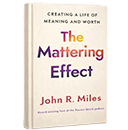
For a broader explanation of the concept itself, see What Is the Mattering Effect?.
The Great Erasure and Systemic Unmattering
When environments evaluate people strictly on output, they create systemic unmattering: structural conditions, incentives, and operational norms that prioritize standardized throughput while treating human dignity as optional.
This dynamic drives the great erasure: the systematic stripping away of individuality within environments optimized for utility. In these systems, professionals are reduced to functional abstractions:
- A headcount to manage
- A capacity percentage on a resource sheet
- A role description
- A seat that needs filling
While operational categorization is necessary for logistics, it is devastating when treated as the whole truth. Human beings are not assets to be consumed. The challenge for forward-thinking organizations is not to abandon performance metrics, but to ensure that the pursuit of efficiency does not erase the person delivering it.
Restoring the Foundation: The M.A.T.T.E.R. Framework
When a physical structure shows signs of progressive failure, you do not paint over the cracks; you rebuild the load-bearing supports. Restoring human worth at work requires tuning out the static of extraction and turning back on the six primary signals of the M.A.T.T.E.R. Framework:
- M — Meaning (The Signal of Purpose): Moving from the exhaustion of chasing external validation to knowing your contribution serves a genuine purpose. It acts as the stabilizing beam holding up the broader architecture of your daily effort.
- A — Autonomy (The Signal of Agency): Reclaiming active authorship over your focus, and refusing to spend your career as the operational manager of a life you never consciously chose.
- T — Trust (The Signal of Safety): Restoring the courage to stop self-censoring. Trust is the radical decision not to abandon your own judgment just to remain acceptable in the presence of others.
- T — Time (The Signal of Presence): Trading the frantic management of hours for unhurried space, protecting what truly matters rather than allowing the urgent to consume the essential.
- E — Energy (The Signal of Vitality): Creating a positive return on energy by ensuring that what you pour your life force into actively replenishes and fuels you, rather than keeping you in permanent extraction.
- R — Reciprocity (The Signal of Mutual Care): Balancing the shared seesaw by ending the profound isolation of being the dependable pillar everyone leans on, and allowing care and support to flow both directions.
The Compounding Toll of the Mattering Tax
When professionals spend years pouring out effort without receiving reciprocal signals of worth, they run a severe psychological deficit known as the mattering tax.
The mattering tax is the compounding physiological, emotional, and cognitive cost of constantly having to audition for your right to exist, prove your utility, and manage your own expendability. It manifests as:
- Compulsive overperformance and perfectionism
- Chronic difficulty saying no or setting limits
- Anxious vigilance about perceived standing
- Suppressing personal boundaries to avoid causing friction
- Operating as the anchor for everyone else while carrying your own exhaustion in silence
The problem is not hard work; it is the draining reality of treating work as a daily trial to justify your value.
When organizations reverse this dynamic, they unlock the mattering dividend: the reserve of energy, creative focus, and resilience that becomes available the moment people stop burning their life force proving they belong.
How Leaders Cultivate Cultures of Significance
Fostering mattering does not require lavish budgets, complicated programs, or performative perks. It requires consistent, credible signals woven into daily interactions:
For a broader organizational approach, see How to Build a Culture of Mattering.
- Listen without rushing to triage: When colleagues speak, avoid jumping straight to problem-solving. Being listened to with genuine attention signals that a person’s inner reality has weight.
- Bridge the gap to real-world impact: Regularly demonstrate how an individual’s specific contributions improve the lives of colleagues, clients, or communities. When people see who benefits from their labor, work shifts from mechanical output to purposeful contribution.
- Distribute agency, not just assignments: Grant team members genuine ownership over decisions, workflows, and solutions. Autonomy communicates that their expertise and judgment are trusted.
- Deliver precise appreciation: Move past generic praise by identifying the unique talent, perspective, or care someone brought to a project. Specific appreciation proves that the individual was actually noticed.
- Treat time as sacred space: When an organization routinely consumes calendars with unnecessary meetings and false emergencies, it signals that an employee’s life is expendable. Protecting people’s time communicates respect.
- Audit for return on energy: Look at workloads to verify that demands allow for recovery and replenishment. Driving a team to high performance today at the expense of their vitality tomorrow is an extractive failure.
- Build two-way reciprocity: Employees invest their intellect, emotional labor, and life force into the company. Leaders must ensure that growth, advocacy, respect, and tangible support flow back in equal measure.
Reclaiming Your Significance as an Employee
While leadership establishes systemic conditions, individuals can take deliberate steps to counter quiet disorientation:
- Audit the six signals: Determine where the leak is occurring. Are you missing meaning, autonomy, trust, time, energy, or reciprocity? Naming the missing signal pinpoints where to intervene.
- Shift from adopter to adapter: Move from passively accepting every incoming demand to authoring conscious choices about how and where you deploy your attention.
- Reframe the central question: Instead of asking, “How can I make myself more indispensable here?” ask, “What boundaries and conditions do I need to contribute meaningfully without disappearing from myself?”
- Communicate the gap directly: Open an honest dialogue with your manager about where you need greater ownership, feedback on your impact, or relief from non-essential noise.
Moving Beyond Simple Engagement
Employee engagement measures how focused an individual is on executing organizational goals. Mattering asks a deeper human question: “Do I register here as a human being?” A person can be engaged with a deliverable while feeling personally hollow. They can generate stellar results while slowly slipping into functional absence. Mattering forces us to look past superficial activity and address the human operating system underneath.
Mattering is not a luxury prize you earn after achieving success; it is the fundamental signal that makes a life worth living. You do not have to keep paying the mattering tax, or shopping in the mattering market, just to buy your sense of worth. The moment you stop living as a resource to be mined and start living as an author of your own choices, you don’t just survive your work, you finally arrive inside your own life. Make the invisible visible, and remind the people who spend their lives making everyone else matter that their existence matters, too.
Frequently Asked Questions About Mattering at Work
What is mattering at work?
Mattering at work is the feeling that you are seen, valued, respected, and needed within your workplace. It involves believing that your presence and contributions have meaningful significance, rather than feeling valued only for your productivity or output.
Why is mattering important in the workplace?
Mattering is important because people have a fundamental need to experience significance and belonging. When that need is supported at work, employees may feel more connected to their contributions, relationships, and organizational purpose.
What is the difference between mattering and recognition?
Recognition acknowledges a person’s actions or achievements. Mattering is a broader experience of feeling that you and your contributions have significance. Recognition can support mattering, but recognition alone does not guarantee it.
What are the signs that an employee does not feel valued?
Possible signs include withdrawing from conversations, sharing fewer ideas, feeling replaceable, losing connection to the impact of work, doing only what is required, or continuing to perform while becoming emotionally disconnected.
How can managers help employees feel that they matter?
Managers can support mattering by listening carefully, connecting work to meaningful impact, providing appropriate autonomy, demonstrating trust, recognizing specific contributions, protecting people’s time and energy, and building reciprocal relationships.
Can someone feel valued at work without receiving praise?
Yes. Praise is only one possible signal of value. People can experience mattering through being trusted, heard, respected, included, given meaningful responsibility, and shown how their contributions make a difference.
What is the Mattering Gap?
The Mattering Gap is the distance between what a person gives to the world and how much they feel they matter. At work, this can occur when someone’s contribution is significant in practice but they experience little recognition, meaning, connection, or sense of personal significance.
What is systemic unmattering?
Systemic unmattering describes systems that reward output while treating human worth as optional. In a workplace, this can occur when organizational structures consistently prioritize performance and productivity without adequately considering people’s need to feel seen, valued, and significant.
How does mattering relate to workplace culture?
Workplace culture influences whether people feel heard, respected, trusted, included, and connected to meaningful contribution. Because these experiences are shaped by everyday norms and organizational systems, mattering is both an individual experience and a workplace culture issue.
How can I feel like I matter more at work?
Begin by identifying what is missing from your experience. Consider whether the issue involves meaning, autonomy, trust, time, energy, or reciprocity. Then look for practical opportunities to strengthen the missing element through conversations, boundaries, relationships, ownership, or clearer connections between your work and its impact.